Immersive Experiences, VR & AR
Naked-Eye Mixed Reality
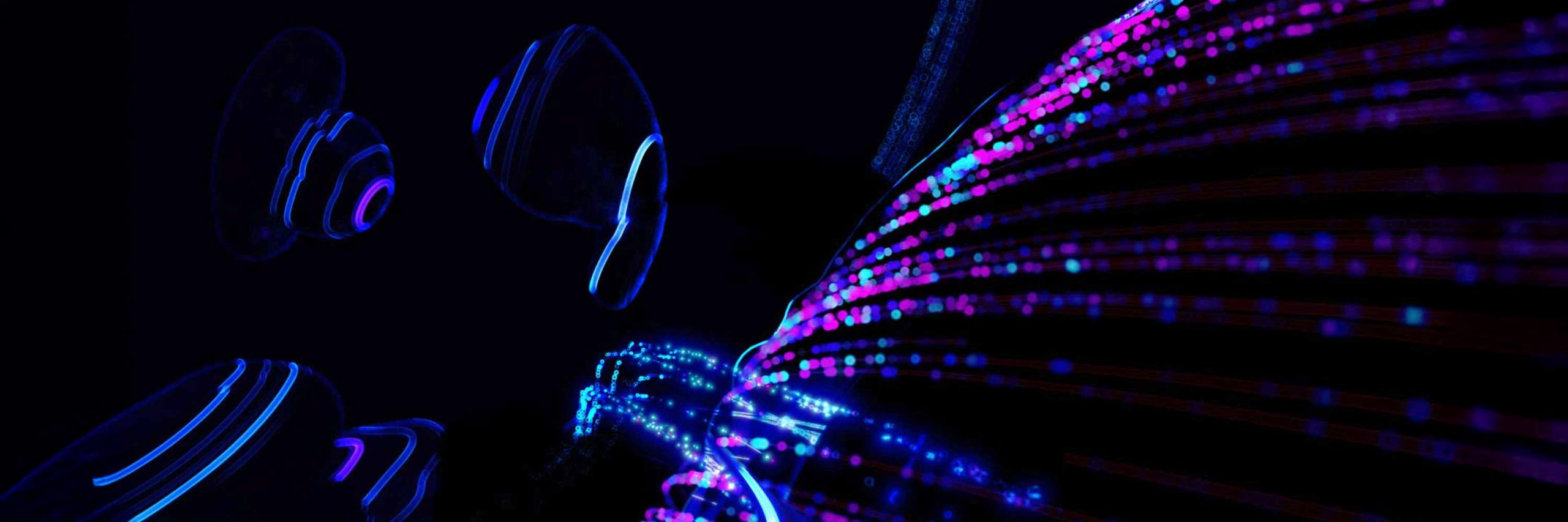
Headsets remain the biggest barrier to mixed reality adoption — bulky, isolating, and impractical for shared or public spaces like a showroom floor or a classroom. Projector-based MR platforms use RealSense depth cameras to superimpose digital scenes — 3D models, architectural walkthroughs, digital-twin factory simulations — directly onto physical space, with no wearable required. Combining an RGB visible-light sensor to recognize movement and posture with an infrared sensor to measure precise distances between body points and the surrounding space gives these systems a one-to-one, three-dimensional representation of both the person and the room, so a viewer’s own shifts in height, angle, and position drive what they see next. The result is an experience that spans architectural modeling, industrial simulation, brand marketing, and cultural tourism from a single perception platform.
Motion-Reactive & Interactive Environments
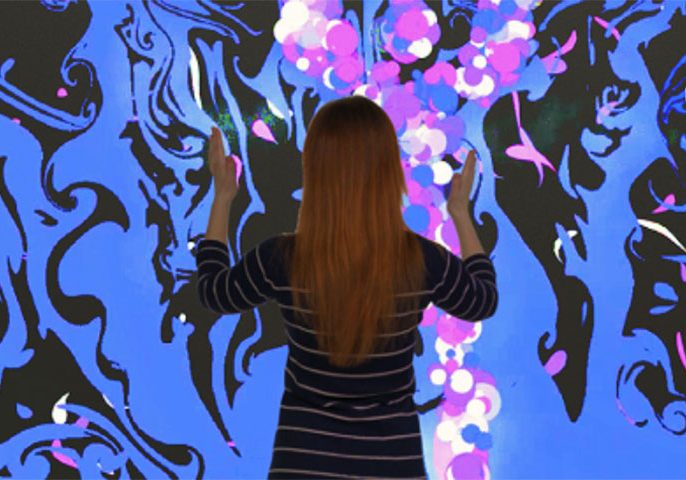
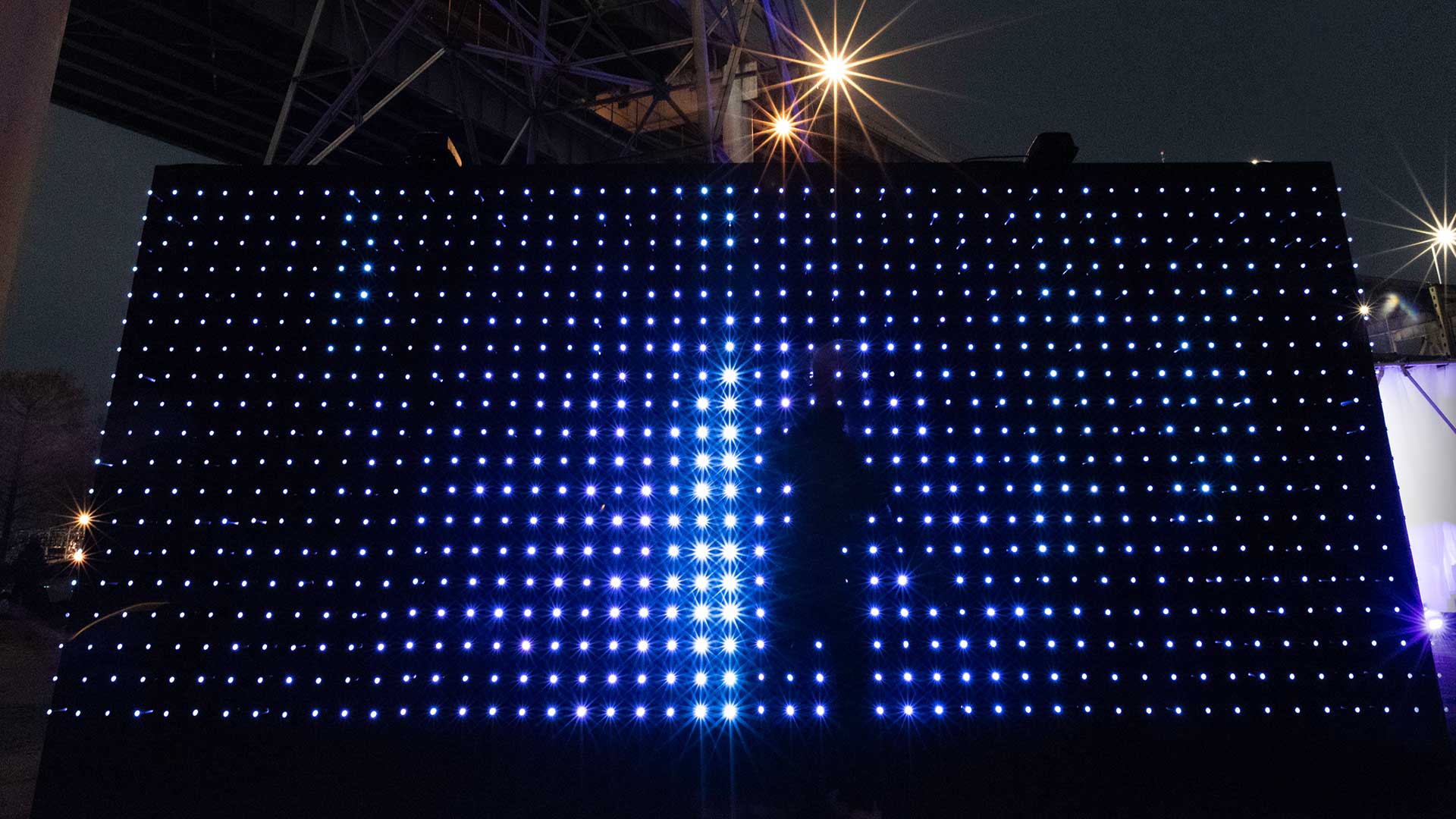
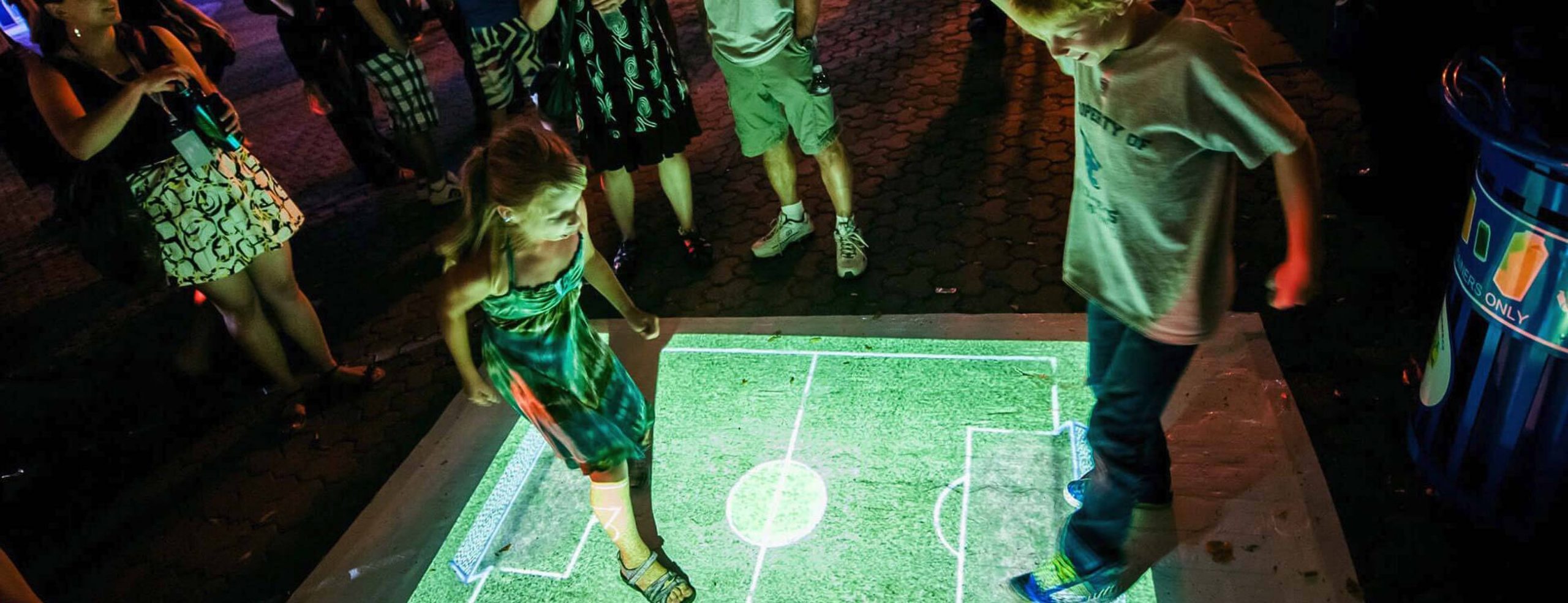
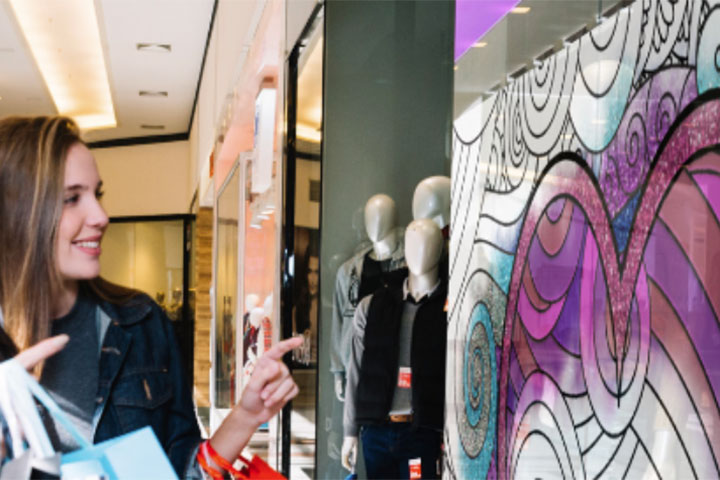
Any wall, floor, storefront window, or tradeshow booth can become an interactive surface once a camera can reliably track where someone is standing and how they’re moving. RealSense depth sensing gives interactive-projection platforms the real-time positional data to make a projected game, display, or environment respond the instant someone steps into frame — no floor sensors, pressure pads, or wearables required. A wide field of view matters as much as accuracy here: it determines how large an interactive area a single camera can cover from a realistically short projection distance, which is the difference between an installation that fits a retail window and one that needs a warehouse ceiling. The same underlying technology scales from a classroom PE lesson to a retail floor display to a museum exhibit without redesigning the sensing layer for each.
Multi-User Tracking & Spatial Precision
An immersive experience built for one person breaks the moment a second person walks in — unless the underlying vision system can tell them apart. RealSense-powered platforms build a human skeletal model and posture-recognition layer on top of depth data precise enough to locate both body position and eye position for each individual in frame, using target-detection capabilities to differentiate between multiple simultaneous users rather than averaging them into one signal. A global shutter on the RGB sensor keeps color and depth data tightly correlated, which is what allows real-time perspective reconstruction — the environment convincingly shifting as a viewer squats, turns, or moves — instead of a laggy or misaligned projection.
Compact, Low-Power, Deployable Hardware
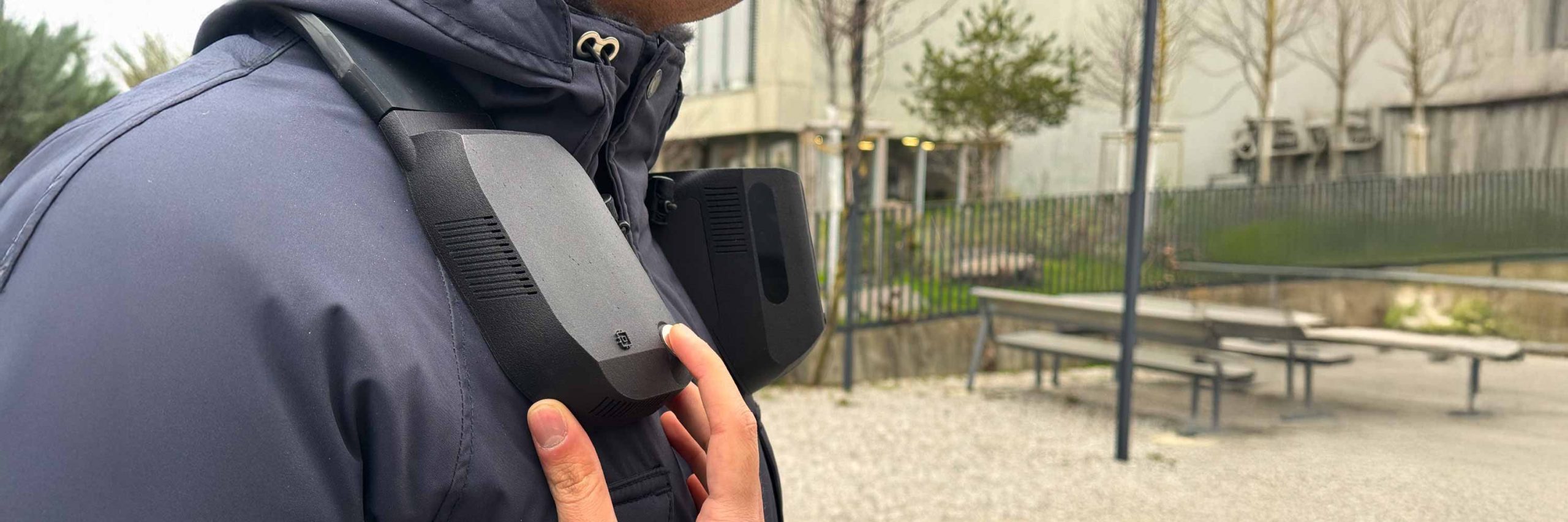
Immersive installations live in the real world of retail footprints, classroom budgets, and touring exhibits — not a fixed lab setup — so the hardware has to be small, efficient, and fast to install. RealSense’s consolidated design combines visible-light and infrared sensing in a single unit, which has let platform builders replace what used to require two separate devices — an RGB camera plus a separate laser sensor — with one, cutting hardware volume roughly in half and eliminating the custom sensor-fusion software that pairing mismatched devices used to require. That same small form factor and low power draw extends battery-powered interactive installations’ run time between charges, making pop-up retail activations, touring exhibits, and mobile classroom setups practical rather than a logistics burden.

Fast Integration, Reliable Support
A platform is only as fast to bring to market as its slowest component to integrate. Immersive-experience builders consistently point to the RealSense SDK’s ease of setup as a deciding factor over competing depth-sensing hardware — one interactive-projection company ships its product with simple, self-installable setup instructions so customers can deploy it themselves rather than requiring a technician on-site. For platforms doing custom development on top of the SDK, direct engineering support has meaningfully shortened build cycles: synchronized posture and positioning output that once took months of in-house sensor-fusion work now ships as a working capability out of the box, freeing R&D time for the experience itself rather than the plumbing underneath it.
Proven Across Industries
RealSense-powered immersive platforms are running in production across education, retail, entertainment, and industrial training today. One naked-eye mixed reality platform deploys five RealSense cameras — ten sensors total — per installation, and has brought its solutions into educational research, industrial manufacturing, and commercial entertainment; switching to a consolidated RealSense sensor design took its RGB resolution from 352×288 to 640×480 and roughly tripled point-cloud density compared to its earlier architecture. On the interactive-projection side, a wide field of view has made RealSense the standard depth camera across many retail and classroom installations, valued for covering a larger interactive area from a shorter distance than competing cameras — with its maker citing RealSense’s form factor and customer support as reasons it remains the preferred choice.