
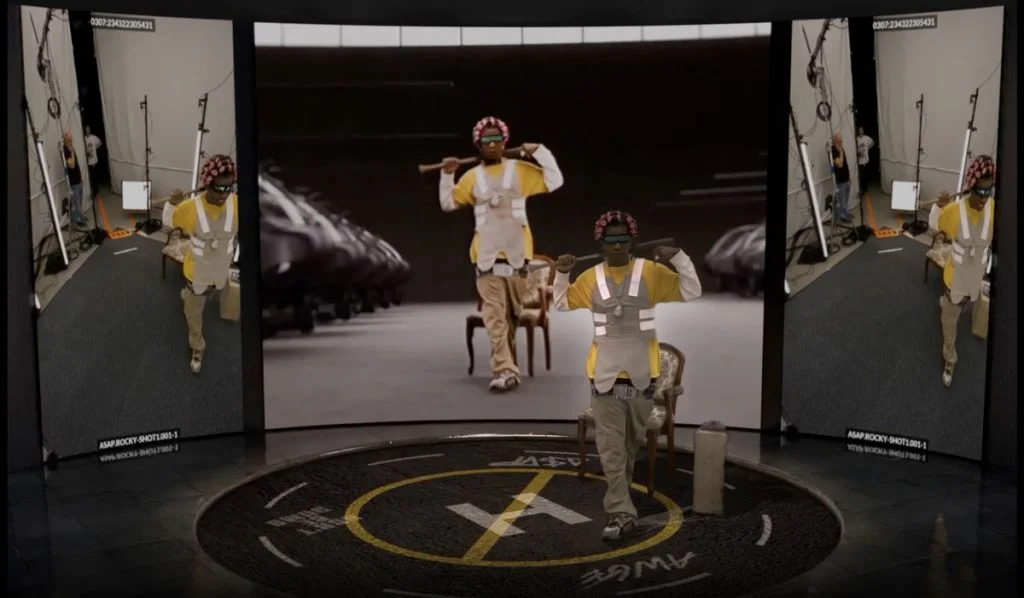
Synchronized RealSense depth cameras help Evercoast scale 4D capture for high-end VFX, film and emerging Physical AI applications
The challenge
Volumetric capture has historically depended on Hollywood-caliber stages, expensive cameras, racks of GPUs and heavily customized workflows. Evercoast wanted to make the technology cost-effective, scalable and productized, and that called for hardware combining RGB and depth in one device, onboard depth processing, real-time operation, hardware synchronization and a price point that made deploying dozens of cameras practical.
The solution
Evercoast built its volumetric capture systems around synchronized arrays of RealSense D455 depth cameras. Because depth is generated on the camera rather than computed downstream, Evercoast avoided dedicating GPU racks to that step and concentrated its engineering on the system-level problems where it differentiates: synchronizing, calibrating and orchestrating large camera arrays, then reconstructing what they capture. RealSense also let the company raise camera count without scaling hardware cost and compute at the same rate.
The results
Evercoast says RealSense lets it build dense multi-camera systems at a fraction of the hardware cost of traditional high-end volumetric stages, while still producing the synchronized RGB and depth data that 3D and 4D reconstruction requires. The same architecture scales from small installations to very large ones without fundamentally changing the workflow, and production teams can evaluate volumetric results in real time instead of waiting on a long post-processing cycle.
Getting Dozens of Cameras to Capture the Same Instant
Large-scale volumetric capture requires every camera to capture the same instant, because even slight timing differences place a moving subject in different positions across views, affecting reconstruction quality and the integrity of the spatial data. Evercoast developed vSync, a hardware synchronization system for RealSense arrays that keeps cameras on a single synchronization chain even when they are spread across multiple capture machines.
A Sensor Stack Built for Whole-Body Awareness
RealSense delivers RGB and depth from a single device with depth processing handled onboard, so Evercoast never had to build stereo camera pairs or stand up dedicated GPU racks to calculate it. That let its engineers work on calibration, reconstruction and orchestration instead, and it turned adding viewpoints into a question of coverage rather than a matching jump in cost and compute.
One Capture Stack, From VFX Stages to Physical AI
Media and entertainment gave Evercoast its first proving ground, and the engineering it solved there now maps onto what Physical AI needs: synchronizing and calibrating many cameras, then turning their observations into consistent spatial data. Multi-view volumetric capture preserves appearance, motion, geometry and temporal context in a single dataset, which Evercoast is applying to real-world capture for robotics, world models, simulation and AI model training.
“RealSense was compelling because it gave us depth directly from the camera. Instead of building stereo camera pairs and calculating depth ourselves, we could effectively get that part of the pipeline for free.”
— Ben Nunez,
CEO and Co-founder, Evercoast
